Audio

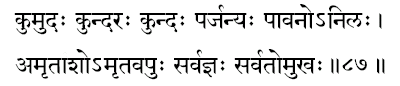
Sri Vishnu Sahasranamam - SLOKA 87
|
kumudah kundarah kundah parjanyah pavano'nilah | om kumudAya namah a) He Who is on this earth with delight by enjoying the association with Hisdevotees. Om kumudAya namah. The nAma consists of two or three parts, depending on the interpretation. Oneway to look at the nAma is as ku + mudah. The first part is derived from theroot kai - Sabde - to sound. kauti dhvanati iti kuh - that which is fullof sound. The amara koSam gives the meaning "world" to the word kuh- kuh pRthivI prthvI. mudah is derived from the root muda - harshe - torejoice, to be glad. modata iti mudah - One who rejoices, or modayatiiti mudah - One Who makes others rejoice. Another way to look at the nAma isku + mu + dah (see c below). a) SrI BhaTTar interprets the nAma in terms of ku + mudah. His vyAkhyAnam iskau - prakRti maNDale - (even) in this world of prakRti; mudah - (taih saha)modate - (In the company of His devotees) He rejoices. So He is known as kumudah. SrI v.v. rAmAnujan wonders aloud how difficult it must be for bhagavAn tohave to be part of us just to enjoy our company. By coming into this world, LordrAma had to undergo lots of miseries - "nATTil piRandu paDAdana paTTu"is how He had to live - such is life in this world, that it will make even theparama purushaN undergo enormous suffering and misery. Lord rAma Himselfdescribes His miseries – SrI cinmayAnanda interprets the nAma thus: "One Who gladdens theearth", or "One Who is gladdened by the earth". He explains thatbhagavAn's delight is a sheer expression of His Omnipotence - the very fact thatHe has created this dynamic, complex, cosmos that is so scientifically precise,is a matter of delight, since it is the fulfillment of His Omnipotence. b) SrI Sa'nkara's vyAkhyAnam is - Here is one more instance of seeing the difference in the approaches of SrISa'nkara and SrI BhaTTar in their general approach to their interpretations. SrISa'nkara explains the nAma as His giving joy to the earth by freeing it of itsburdens, and SrI BhaTTar explains the nAma as His rejoicing and derivingpleasure by the company of His devotees. We should keep in mind that both theinterpretations are valid anubhava-s of bhagavAn. The difference in approach isthat one emphasizes His Power, and the other emphasizes His saulabhayam andsauSIlyam. c) SrI M. V. rAmAnujAcArya gives an additional interpretation: d) SrI satyadevo vAsishTha gives the meaning "sky" to "ku"(based on kai - Sabde), and gives the interpretation to the term "kumudah"as "One Who delights in the sky, in the form of the sun" - e) The word kumuda is also used to refer to the blue lily or to lotus. He Whowears a garland made of these is kumudah - utpala dhAro kumudah (SrIbaladeva vidyA bhUshaN). a) The Bestower of the knowledge of the Supreme Reality (kunda-rah). Om kundarAya namah. SrI BhaTTar uses the word kundam as referring to "The knowledgeof the Supreme Reality" or para-tattva j~nAnam. This is based on hisinterpreting the term ku as a reference to "mukti-bhUmi",rather than just as meaning "bhUmi". kundam is that which givesthe mukti-bhUmi, namely the knowledge of para-tattva. Since He is the Giver ofthis knowledge, He is kunda-rah (rAti = dadAti = gives). SrI v. v. rAmAnujan refers us to nammAzhvAr's tiruvAimozhi pASuram 2.3.2,where he addresses bhagavAn as "aRiyAdana aRivitta attA!" –"You are the AcArya Who imparted the true knowledge to me". We havealso Lord kRshNa's declaration in the gItA: teshAm satata-yuktAnAm bhajatAm prIti-pUrvakam | "To those who are ceaselessly united with Me and who worship Me withimmense love, This is the para-tattva-j~nanam that SrI BhaTTar is referring to. b) The nirukti author has added an interpretation to this nAma, that isborrowed from SrI BhaTTar's interpretation for the next nAma, kundah.This involves the use of the meaning "sin" for the word ku – kumavyayam pApa-vAci, tasya dAraNAt kun-darah – He Who dissolves oreliminates the sins (accumulated over countless births). SrI satya devo vAsishTha also includes this as one of his threeinterpretations for the nAma (the other two are covered below). The amara koSavyAkhyAnam gives the following as an illustration of the use of the word kuwith the meaning "sinful" - tyajet ku-jana-sa'ngam _ Leave theassociation with sinful people. SrI vAsishTha's vyAkhyAnam is: kum = pApamdRNAti sva-sevAnAm iti kum-darah – He who tears apart or removes the sins ofHis devotees. He makes them see knowledge by removing the sins from their mind– c) SrI Sa'nkara's vyAkhyAnam is that the nAma signifies that He bestowsfruits that are as pure and agreeable as the kunda (jasmine) flowers – kundapushpa tulyAni SuddhAni phalAni rAti dadAti iti kunda- rah. d) Alternately, SrI Sa'nkara gives the explanation – He Who acceptsofferings that are pure like the kunda flower - e) A third interpretation given by SrI Sa'nkara is that He has the nAmarepresenting His action of tearing the earth or piercing the earth (dara– to tear) in search of hiraNyAksha in His varAha incarnation: f) SrI vAsishTha indicates the root for the word kunda as kamu – kAntau– to desire, and the application of the uNAdi sutra abdAdayaSca (uNAdi. 4.98),leading to the word kundah. He gives the interpretation kAmayata iti kundahkamanIyah – That which is desired or sought for is kunda. Using the rootrA – dAne – to give, kundarah means "One Who gives what issought or what is desired" – kamanIyam vA'ncitam dadAti iti kunda-rah. g) An alternate interpretation given by SrI vAsishTha is: kum – pRthivIdArayati iti kun-darah - (based on the root dRR – vidAraNe – to tear, todivide). He is referring to bhagavAn creating the great oceans by tearing apartthe bhUmi – h) SrI satya sandha yatirAja gives the interpretation – bahkta-samarpita kunda pushpeNa ramati iti kunda-rah – a) He Who grants the successive stages of higher knowledge. Om kundAya namah. As explained in the previous nAma, the word ku refers to bhUmi as well assin; the word kunda itself refers to the jasmine flower. The previous nAma,kundarah, and the current nAma, kundah, are somewhat similar. The part -dah isinterpreted as dadAti - gives, dAyati - cleanses, or dyati - eliminates, thusleading to the different interpretations. a) We had seen that the meaning "para-tattva-j~nAnam" was given bySrI BhaTTar to the word kunda. kundah is One Who bestows this knowledge.kundarah was also assigned the same meaning earlier. SrI BhaTTar distinguishesthe current nAma from the previous one by referring in the current nAma, tobhagavAn's giving the para-tattva knowledge to those that have started climbingthe steps of knowledge through self-control etc., in steps of para-bhakti,para-j~nAnam, and ultimately parama-bhakti. b) SrI BhaTTar also gives an alternate interpretation. We saw in the previousnAma the assignment of the meaning "sin" to the word ku, and aninterpretation added by the nirukti author for the previous nAma based on thismeaning for the word ku. While we saw the interpretation "He Who destroysthe sins" for the previous nAma, the interpretation given for the currentnAma is "He Who cleanses the sins", based on the meaning ku = pApam,and the root daip = Sodhane - to purify; pApam dAyati Sodhayati iti kundah. Hefirst removes the sins from His devotee (kundarah), and then cleanses the sinsso that they do not get back to the devotee again (kundah) - pApam dArayati itikundarah, api ca vidAritam pApam Sodhayati iti kundah. This is also one of the interpretations given by SrI vAsishTha - c), d) nammAzhvAr uses the nAma kunda in tiruvAimozhi pASuram 2.6.1 - SrI Sa'nkara gives several interpretations for the nAma. e), f) SrI v.v. rAmAnujan comments that the term can also be taken to mean"One who has the spear called kunta" - (nin kaiyil vEl pORRi -tiruppAvai). SrI uttamUr vIrarhAvAcArya svAmi also refers to this as onepossible interpretation for the occurrence of this word in nammAzhvAr's pASuram.The nAma in this case will be "kuntah" instead of "kundah".The meaning then could also be "One who is sharp like the kunta spear inremoving the sins of His devotees". g) One of Sri Sa'nkara's alternate interpretations is: sarva pApa viSuddhyartham vAjimedhena ceshTavAn | "The son of bhRgu, in order to purge all his sins, performed the horsesacrifice. In that sacrifice that required great gifts to be given away, He, inHis incarnation as the son of bhRgu, made a gift of the earth to mArIca withgreat pleasure". h) The third interpretation by SrI Sa'nkara is: "He Who got rid of thekshatriya-s from the earth" - nih-kshatriyAm yaSca cakAra medinIm anekaSo bAhuvanam tathA'nchinat | "Let Hari, the best of the bhRgu family, who made the earth free fromwicked kshatriya-s many a time, and who cut off the thousand arms of kArtavIrya,be with me for the increase of prosperity". i) SrI satya devo vAsishTha gives an additional interpretation using themeaning "earth" for ku, a) He Who bestows His blessings on the devotees like therain-cloud. Om parjanyAya namah. a) SrI BhaTTar derives the nAma from the root aja – ardane - to dispel. Heexplains the nAma in terms of His removing (dispelling), like a rain-cloud, thethree kinds of tApa-s – the tApa-traya-s – AdhyAtmika, the Adhi-daivika, andthe Adhi-bhautika types. These three are: the pain cause by one's own mind etc.,the pain caused by fate or gods, and the pain caused by animals, other people,etc. SrI v.v. rAmAnujan adds that it is by bestowing the knowledge about Himthat He relieves us from the tApa-traya-s. BhagavAn is frequently referred asthe rain-cloud by AzhvArs for showering His blessings on His devotees: - tiruma'ngai AzhvAr's tiru neDum tANDakam (30) – minnu mA mazhai tavazhummega-vaNNA!; SvAmi deSikan refers to bhagavAn's guNa of removing the tApa-traya-s of thedevotees who are immersed in devotion to Him in his SaraNAgati dIpikA: tApa-trayeNa vihatim na bhajqanti santah samsAra gharma janitenasamAdhimantah || (SaraNAgati dIpikA 23) "Those j~nAni-s who are immersed in bhakti yoga towards You do notsuffer from the tApa-traya-s that are caused by the heat of samsAra". SrI Sa'nkara's interpretation is also in terms of His removing the threetypes of tApa-s – SrI Sa'nkara's alternate interpretation is that this nAma signifies that Heshowers all desired objects on His devotees like rain – sarvAn kAmAnabhivarshati iti parjanyah. SrI kRshNa datta bhAradvAj looks at the nAma as pari-janyah, which is treatedsame as parjanyah by dropping the –i in pari. His interpretation is SrI vAsishTha derives the nAma starting from the root pRsh – secane – tosprinkle, and the application of the uNAdi sutra "parjanyah" (3.103),with the meaning "cloud". That which wets or drenches is parjanya – parshati – si'ncati iti parjanyah. SrI bala deva vidyA bhUshaN gives a similarinterpretation: b) SrI satyasandha yatirAja gives the interpretation – c) SrI vAsishTha gives at least six different ways of deriving the nAma,starting from different roots. a) He Who is the forrn of the wind. Om pavanAya namah. We saw this nAma earlier in Slokam 32 (nAma 292). SrI BhaTTar indicates the root for the nAma as pavi – to go. The amara koSavyAkhyAnam indicates the derivation from the root pU'ng – pavane; pavata itipavanah; punIte vA; The meanings are thus: that which goes, that which blows,that which purifies, etc. a) SrI BhaTTar's interpretation for nAma 292 was that He has the nAmasignifying that He moves about in the form of the wind, with just a fraction ofHis power. SrI cinmyAnanda conveys the same thoughts in the following words: In Slokam 32, SrI Sa'nkara's interpretation for the nAma is that He is thePurifier in the form of the wind. He has given the reference to gItA Slokam10.31 as support: pavanah pavatAm asmi rAmah Sastra-bhRtAmyaham | "Of moving things, I am the wind. Of those who bear weapons, I am rAma". b) SrI BhaTTar's interpretation for the current instance of this nAma is thatbhagavAn goes Himself (pavi – to go) to His devotees to remove their distress- pavate iti pavanah. c) SrI Sa'nkara's interpretation for the current instance of the nAma is thatHe purifies anyone who merely remembers Him – smRti- mAtreNa punAti itipavanah. In the context of bhagavAn being the Great Purifier, SrI rAdhAkRshNa Satricomments in his vyAkhyAnam for the Slokam "pavitrANAm pavitram yah..",that acts such as taking a bath in the holy waters, visiting divya kshetra-s,etc., are ways of our ridding ourselves of sins, when we undertake these actswith the faith and belief that bhagavAn is present in these rivers and divyakshetra-s. Thinking of Him, worshipping His divya ma'ngaLa vigraha-s, singingHis praise, performing pUja for Him, meditating on Him, prostrating, etc., areall ways to remove our sins through His purifying power. SrI cinmayAnanda uses the version "pAvanah" in Slokam 87, and givesthe translation for the nAma as "One Who ever purifies". He commentsthat "The impurities of a personality are gathered when the mind andintellect, in a natural impulse of animal voluptuousness, rush towards thesense-objects with ego-centric passion". The purification by His poweroccurs when we peacefully let our minds settle in contemplation of the divinenature and eternal glory of SrI nArAyaNa. c) SrI vAsishTha also uses the version "pAvanah", but indicatesthat the interpretation is the same whether the nAma is taken as pavanah orpAvanah. He gives the meaning "He Who purifies", for the nAma. Hepoints out that bhagavAn purifies in many ways: in the form of the wind byblowing, fire by burning, water by washing, earth by consuming, etc. So Hispurifying power is manifest all over. He gives the reference to Rg vedic hymn: punAti dhIro bhuvanAni mAyayA – Rg. 1.160.3, and also to niruktam 5.6: vAyuhpavitram sa mA punAtu agnih pavitram sa mA punAtu. He also has summarized hisvyAkhyAnam in the form of the following Sloka: sa pAvano vishNur-amartyakarmA punAti viSvam vividha- prabhedaih | d) In one of his interpretations, SrI satya sandha yatirAja uses the version"pAvanah", a) He Who need not be goaded by anyone in His blessing thedevotees (an-ilah). om anilAya namah. We looked into this nAma in Slokam 25 (nAma 236). The root word from whichthe nAma can be derived is ila – preraNe – to urge. Apte's dictionary alsogives the meanings: to sleep, to go, to move, to throw, etc., for the word ila (ila–svapna kshpaNayoh – to sleep, to throw). SrI BhaTTar also derives the nAmafrom the root ana – prANane - to live, to breathe. ilA also means the earth.These different meaning and combinations are used in arriving at the differentanubhavam-s below. a) For the current instance of the nAma, SrI BhaTTar derives theinterpretation based on the root ila – preraNe – to urge. ila refers to thatperson who urges another to do an act. Since bhagavAn does not have to be urgedby anyone to bless those who worship Him, He is called a-nilah. His gives thefollowing in support: b) One of SrI Sa'nkara's interpretations is that bhagavAn has this nAmabecause He has no enforcer above Him: c) SrI Sa'nkara also gives another interpretation that is related tobhagavAn's ease of approach to His devotees. This is based on the root nil –gahane – to become thick, deep, hard to be understood. Using the noun form nilah meaning "difficult to understand", SrI Sa'nkara interprets thenAma a-nilah as "One Who is not difficult to understand for thedevotee"- d) For the instance of this nAma in Slokam 25 (nAma 236), Sri BhaTTar derivesthe meaning based on the root ko hyevAnyAt kah prANyAt - Whoever can breathe and whoever can live if theAkASa (i.e., paramAtmA) were not there? - (taittirIya nArAyaNa 7); prAnAtvAyur_ajAyata - The wind was born out of His breath (purusha sUktam 14). Notethat in this interpretation, anilah is not equated with air or wind, but as Hisbreath – prANa, that supports the wind and all other life. e) SrI Sa'nkara gives several alternate interpretations for the nAma inaddition to b) above. f) For the instance of the nAma in Slokam 25, SrI rAdhAkRshNa SAstri looks atthe nAma as an + ilah, where ilA refers to bhUmi, used in the sense of supporthere – avidyamAnA ilA AsrayatayA an-ilah. Since He needs no support of theearth, air, etc., He is anilah. g) Or, one can use the amara koSa vyAklhyAnam – na vidyate nilah nilayamsthAnam yasya iti anilah – He Who does not have a fixed place is anilah. h) Another interpretation given by SrI Sa'nkara is: anAditvAt anilah – OneWho has no beginning or end;. i) One more of SrI Sa'nkara's interpretations is: anAdAnAt anilah – One Whohas no binding. j) SrI baladeva vidyA bhUshaN seems to use the pATham nilah instead of anilahin his interpretation – j) An alternate interpretation by SrI vidyA bhUshaN is that He has the nAmasignifying that He gifted the kingdom to ugrasena after killing kamsa – kamsavada nirjitAyA ilAyA bhUmeh ugrasenAya dAnAt. k) Yet another anubhavam of SrI vidyA bhUshAn is in terms of the sleeplessnights that kRshNa spent planning on how to rescue rukmiNi. The term ilA is usedhere with the meaning "sleep", and the pATham used is anilah. The dharma cakram writer gives the meaning for this nAma that bhagavAn is inthe form of air, and gives us a view of how important the meditation on thisguNa of bhagavAn is for our life. Without food we can go on for many days;without water we can survive for a few days; but without air, but a few minutes.That is how important air is for our living; and so also is the meditation onvishNu for our spiritual life. He quotes mahAtmA gAndhi in this context - thathe could survive without food for several days (and hasn't he proved it severaltimes!), but he could not live without prayer for even a day. The air is alsospread around everywhere, just as mahA vishNu is. Our mind wanders aroundeverywhere, and occupies everything, just as air occupies all available space.Man has learned to control and contain air. So also, he can learn to control hismind by constant meditation on vishNu. This is another lesson we can take fromthis nAma. a) He Who feeds His devotees with the Nectar - Himself. Om amRtASAya namah. The nAma consists of a + mRta+ ASah. a-mRta refers to undying or eternal, orto nectar. ASah is derived from the root aS – bhojane – to eat. One Whoconsumed amRtam, or One Who gives amRtam to others, is ASah - aSnAti ASayati vAASah. a) SrI BhaTTar's interpretation is – tAn sva-guNa amRtam ASayati itiamRtASah – He Who feeds His devotees with the Nectar of His guNa-s. SrI v.v.rAmAnujan refers to tivruvAimozhi 8.8.4, where nammAzhvAr conveys this: …. tEnum pAlum kannalum amudum Agit tittittu en UNil uyiril uNarvinil ninRaonRai uNarndEnE. "I can feel that He is in my body, flesh and blood, life-breath and thefaculty of thinking. He is sweet like honey, milk, sugar, candy, and whatnot". nammAzhvAr also describes that bhagavAn voluntarily entered into him and gavehim bliss as the insatiable nectar - ArA amudamAi al AviyuL kalanda kArAr karu mugil pOl en ammAn akkaNNanukku (tiruvAi. 2.5.5) SrI baladeva vidyA bhUshaN gives a similar interpretation – amRtam ayAcitammoksham ASayati bhojayati bhkatAn iti amRtASah – He Who feeds – bestowsmoksham to His devotees unasked, is amRtASah. b) SrI Sa'nkara gives multiple interpretations. The first one is thatbhagavAn is called amRtASah because He consumes amRta or Immortal Bliss, whichis His Own nature – sva-rUpa amRtam aSnAti iti He also refers to bhagavAn'schurning of the Milk-Ocean and consuming the amRtam from this action in additionto giving it to the deva-s. c) d) Sri Sa'nkara gives an additional interpretation using the meaning"desire or will" for the word "ASA", and gives the meaningto the nAma as "One Who has an ever-living will to give fruits" –One Who has amRtA ASA – amRtA avinaSvara phalatvAt ASA vA'ncA asya itiamRtASah. SrI rAdhAkRshNa SAstri explains this as referring to "His desiresor wishes being failure-proof – amRta". e) One of SrI satya sandha yatirAja's interpretations is based on the meaning"desire or attachment" for the word "ASA", and the meaning"mukta-s" for the word "amRta-s" – "One Who is verydear to the mukta-s" – amRtAnAm muktAnAm ASA icchA yasmin vishaya itiamRtASah. f) One of the interpretations given by SrI vAsishTha is that bhagavAn has thenAma indicating that He provides for the unending supply of means of survivalfor all His creation - pravAhato nitya-sthAyIdam catur-vidha bheda vibhaktamyathAtadarha jIvana sAdhanAni ASayati = bhojayati iti amRtASo vishNuh. a) He of a Nectar-like body. Om amRta-vapushe namah. The term amRta was explained for the previous nAma. The term amRta means"undying, non-decaying". It is also used to refer to nectar, or amRtam.vapuh is derived from vap – bIjasantAne chedane ca – to sow, to scatter, toweave, to cut, to shave. The term vapu is used to refer to the body, appearance,etc. In their interpretation for this nAma, SrI BhaTTar uses the meaning"Nectar" for the term amRtam, and SrI Sa'nkara uses the meaning"undying". a) SrI BhaTTar's vyAkhyAnam is – bhagavAn has a body that is like Nectar.His devotees meditate on His divya ma'ngala vigraham – His tirumEni, and neverget satiated. BhagavAn is called ArAvamudan (of tirukkuDantai fame). nammAzhvArdedicates tiruvAimozhi pASuram 5.8.1 to 5.8.11 to sing the praise of ArAvamudan– the Nectar that never gives fulfillment of satisfaction, no matter for howlong we stand in front of Him and worship Him. He again calls out to His ArAAmudam in pASuram-s in 2.5.4 (appozhudukku appozhudu en ArA amudamE), 2.5.5 (ArAamudamAi al AviyuL kalanda), 10.10.5 (enakku ArA Amudu AnAyE) , 10.10.6 (enakkuArA amudamAi), etc. SrI v.v. rAmAnujan remind us of emprumAnAr's SrI vaikunThagadyam, where he describes the experience of bhagavAn in SrI vaikunTham –amRta sAgarAntar-nimaghnah sarvAvayavah sukhamAsIta. b) SrI Sa'nkara's vyAkhyAnam is – mRtam maraNam tad-rahitam vapuh asya itiamRta-vapuh – He Who has an immortal form is amRa-vapuh. Immortal means"unconditioned by time". BhagavAn's tirumEni is not made of theperishable material that our bodies are made of, but instead, its constituent isSuddha-sattva material, that is eternal and non-decaying. SrI rAdhAkRshNaSAstri's anubhavam is that bhagavAn who took incarnations as rAma, kRshNa etc.,is giving His darSanam to us still in that form, even after the passage of time,with that same tirumEni (this is precisely the concept behind the arcA rUpam ofperumAL in our temples). c) One of the interpretations given by SrI satya devo vAsishTha ues themeaning "one who sows" for vapuh – va – bIjasantAne chedane ca –to sow, to cut. His interpretation is bhagavAn pravAhanityam idam viSvam vapatisantanoti tathA sarvam antakAle cchinatti – bhagavAn has this nAma signifyingthat He is the One Who sows the seed of life continuously in this Universe, andwhen the time comes, He is the One who cuts it also. He is the One Whopropagates the vistAra dharmA – of propagation of each species from othermembers of the same species, with no violation of this rule anywhere. a) He Who knows all. Om sarvaj~nAya namah. This nAma occurred earlier in Slokam 48 - nAma 454. a) In Slokam 48, SrI BhaTTar gives the interpretation that bhagavAn issarvaj~nah because He knows that He is the antaryAmI in everything – tathAsarvAtmanA AtmAnam jAnAti iti sarva~jnah. SrI rAdhAkRshNa SAstri refers to usbRhadAraNya Upanishad, which conveys this message: idam sarvam yad ayam AtmA (bRha.6.5.7). He knows that He is the best means and the best end (best upAyam andbest upeyam). SrI v.v. rAmAnujan refers us to nammAzhvAr's tiruvAimozhi 4.7.7,where AzhvAr refers to emperumAn as "nirainda j~nAna mUrti" –sarvaj~nan. SrI rAdhAkRshNa SAstri has given several additional references to the Srutiwhere Supreme Brahman is referred to as sarvaj~nah: - yah sarvaj~nah sarvavit (muNDakopanishad 1.1.9); - sa sarvaj~nah sarvobhavati (praSna 4.10); - esha sarveSvara esha sarvaj~nah (mANDUkya 6); - saviSvakRt siSvavid Atmayonih j~nah kAlakAlo guNI sarvavidyah (SvetASva.2.6.2,16). SrI satyadevo vAsishTha comments that as the Maker of everything that exists(the Creator), He knows the in and out of everything there is to know abouteverything. He gives several Sruti references, where He is referred to as"One Who knows everything": - tvam indra asi viSva-jit sarva-vit puruhUtas-tvam=indra | (atharva.17.1.111) - sa no bandhur-janitA sa vidhAtA dhAmAni veda bhuvanAni viSvA | (yajur. 32.10) - yo nah pitA janitA yo vidhAtA dhAmAni veda bhuvanAni viSva | (Rg.10.82.3) - yas-thishThati carati yaSca va'ncati yo nilAyam carati yah prata'nkam| dvau sannishadya yan-mantrayete raja tad veda varuNas-tRtIyah || (atharva.4.26.2) SrI kRshNa datta bhAradvAj brings out the significance of the "all-knowing" aspect through the following words – SrI bhagavAn hi sarvamsarvatra sarvadA sarvathA ca jAnAti – He knows everything, always, everywhere,through all means. He is the Only One Who knows the past, present and the future– bhUta-bhavad-bhavishyAdInAm j~nAnam. He is inside everyone and everything.All the bodies and all the souls are His body, and nothing is beyond His reach.His sarva~jnatvam thus covers everything that is known, and everything there isto know. b) While SrI BhaTTar's anubhavam for the previous instance of this nAma (inSlokam 48) was that He knows that He is the antaryAmI in everything, hisvyAkyAnam for the current nAma is in terms of what is particularly beneficialfor the devotee - that He knows precisely what is useful for the devotee. HisvyAkhyAnam is that bhagavAn knows what is in the power of His devotees and whatis not in their power, what they can accomplish by themselves and what theycannot accomplish by themselves – teshAm Sakya aSakya sAdhya asAdhyAdikamanusandatte iti sarvaj~nah. The benefit to us from this is that He will help usachieve things that we cannot achieve by ourselves, depending on our wishes. SvIv.v. rAmAnujan reminds us of tiruma'ngai AzhvAr's pASuram of this quality ofperumAl, where AzhvAr takes issue with perumAL for not revealing Himself toAzhvAr right away, without delay, even after knowing fully well how much AzhvAris suffering from the separation from Him: nallAr aRivIr, tIyAr aRivIr; namakku iv-ulagattil ellAm aRivIr, EdE ariyIrindaLUrIrE ! (periya tirumozhi 4.9.6) "You know who Your devotees are that cannot bear separation from You,and who those people are that do not know the value of their association withYou! You know everything else in this universe too! But somehow You do not seemknow the purity and simplicity of the intense pain that I am undergoing rightnow, because You are not giving Your darSanam to me right away!" SrI Sa'nkara bhAshyam for the instance of this nAma in Slokam 48 is "sarvaScaasau j~naSca iti sarva~jnah" - He who is all and who knows all. For thecurrent instance of the nAma, his interpretation is – sarvam jAnAti itisarva~jnah – He Who knows all. The difference is that in the first case hetreats the nAma as sarvah + j~nah (sarvah as a noun or pronoun), and in thesecond case as sarvam + j~nah (as qualifying j~nah). c) SrI cinmayAnanda gives the interpretation as "One Who illumines all– "The Illuminator of all thoughts, all intentions, motives, emotions,and all sense perceptions in an individual". a) He Who can be approached from many paths. Om sarvato-mukhAya namah. sarvatah means "from all sides, in every direction, everywhere".mukham means mouth, face, and in a generic sense, to an opening. a) SrI BhaTTar gives the interpretation that the nAma signifies that thereare many ways of accessing and attaining Him. He has not laid down any rule thatHe can be attained only by a particular means and not by another. On the otherhand, He can be easily attained by means that are sometimes inexplicably simple– yena kenApi vyAjena supraveSatvAt sarvato-mukhah. SrI v.v. rAmAnujan refers us to SaraNAgati gadyam 17, where emperumAn tellsbhagavad rAmAnuja: yena kenApi prakAreNa dvaya vaktA tvam kevalam madIyayaivadayayA – As long as one surrenders with the utterance of the dvaya mantra withor without sincerity, the natural Divine Grace of bhagavAn will protect thisperson. Be it with sincerity (sa-hRdaya), or with feigned sincerity (a-hRdaya),one who needs immediate help (Arta), or one who may need support sometime in thefuture (dRpta), one who is His friend or one who is His sworn enemy (such asrAvaNa), as long one approaches Him in the name of SaraNagati, it is His vow toprotect that person. During vibhIshaNa saraNAgati, Lord rAma tells sugrIva thatHe considers it the sworn duty of a dharmishTan to protect anyone who surrendersto him, even by giving up his own life if needed – Arto vA yadi vA dRptahpareshAm SaraNAgatah | b) SrI Sa'nkara's vyAkhyAnam is that the name signifies that bhagavAn hasfaces on all sides – sarvatah pANi-pAdam tat sarvato'kshi Siro mukham | "Everywhere are Its hands and feet; Its eyes, heads and mouths areeverywhere; Its ears are on all sides; and It exists encompassing allthings". SrI rAdhAkRshNa SAstri gives references to the Sruti in support: - viSvataS-cakshuruta viSvato-mukhah (tai. AraN. 10.1) - SrI cinmayAnanda gives the analogy of the sun whose light shines in alldirections, or the light from a lamp that shines in all directionssimultaneously. Yet another anubhavam is given by SrI kRshNa datta bhAradvAj – -dAsan kRshNamAcAryan
|